- Home
- About Us
- CE Accreditation
-
CE Courses
- Nursing CE Courses
- Advanced Nursing Practice
- Critical Care Nursing
- Disaster and Terrorism Management
- Emergency Nursing
- Ethics, Legal and Advocacy
- Infection Control and Community Nursing
- Gerontology
- Leadership and Management
- Medical-Surgical Nursing
- Nursing Sciences
- Nursing Skills and Procedures
- Pediatric Nursing
- Perioperative Nursing
- Pharmacology
- Psychiatric / Mental Health
- State-Required Courses
- Teaching and Preceptorship
- CE Course Bundles
- Medical CME Courses
- Inservice Courses
- Nursing CE Courses
- CE Certification
- Resources
- FAQ
- Contact Us
Mandatory CE Requirement
Florida Laws and Rules for Nurses: 2026 Update
Understanding Legal Compliance, Scope of Practice, and License Renewal Requirements.
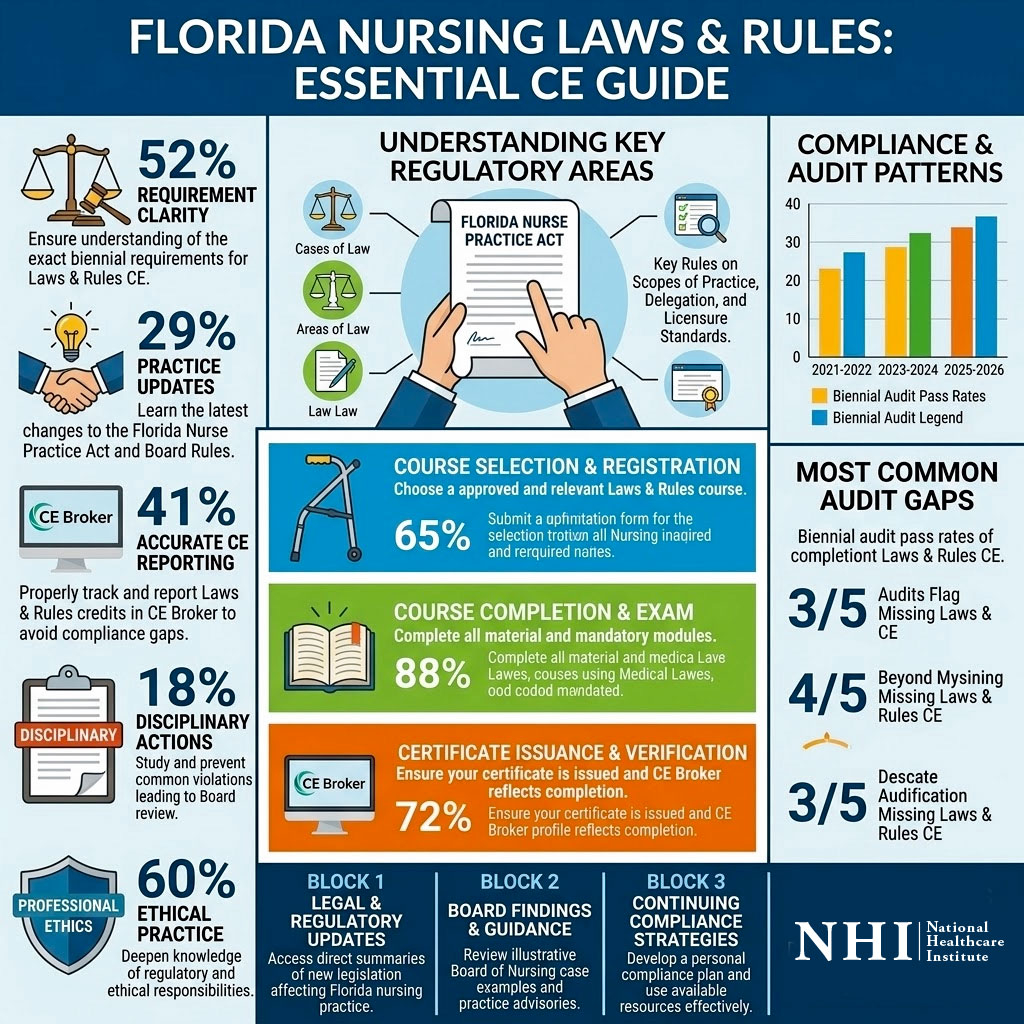
The Florida Laws and Rules CE course is a mandatory continuing education requirement for nurses practicing in Florida. It exists to ensure that nurses understand the legal, ethical, and regulatory framework governing professional nursing practice in the state.
This education is not theoretical; it directly impacts daily clinical decision-making, scope of practice boundaries, patient safety, documentation, delegation, and licensure protection.
For 2026 license renewal, understanding Florida nursing laws and rules is more than a regulatory formality. It is a core component of professional accountability, patient protection, and legal risk management for Registered Nurses (RNs), Licensed Practical Nurses (LPNs), and Advanced Practice Registered Nurses (APRNs).
Who Must Take This Course?
If you hold an active Florida nursing license, this requirement applies to you. This includes:
- Registered Nurses (RNs)
- Licensed Practical Nurses (LPNs)
- Advanced Practice Registered Nurses (APRNs)
It applies regardless of your specialty, practice setting, role (clinical or administrative), or years of experience.
Why the Florida Laws and Rules CE Exists
Healthcare is one of the most regulated professions in the United States, and nursing practice in Florida is governed by state statutes, administrative codes, and regulatory boards. These laws define:
- Scope of practice
- Professional authority
- Legal responsibilities
- Ethical obligations
- Disciplinary standards
- Patient rights
- Documentation requirements
- Delegation & Supervision
This course is not about memorization of statutes, it is about safe, lawful practice in real-world clinical environments. It ensures nurses understand the legal limits of their practice to protect patient safety and reduce legal risk.
What the Course Covers
When you take the Florida Laws and Rules CE, you can expect to cover these foundational areas:
- Nurse Practice Act (Florida Statutes): The foundation of nursing regulation, legal definitions, and practice limitations.
- Scope of Practice: Clear definitions for RN, LPN, and APRN scopes, including independent vs. collaborative practice.
- Professional Accountability: Ethical obligations, standards of care, and professional conduct.
- Licensure and Regulation: Board of Nursing structure, regulatory oversight, and compliance enforcement.
- Documentation and Legal Records: Legal charting standards, medical record integrity, and legal defensibility.
- Delegation and Supervision: What can be delegated, who can receive tasks, and liability boundaries.
- Patient Rights: Consent, confidentiality, patient autonomy, and advocacy responsibilities.
- Disciplinary Actions: Common violations, suspension risks, and revocation processes.
Common Exam Topics
Nurses often ask what is typically tested in these CE exams. Here are the core areas you need to know:
Legal Scope Questions
- Tasks RNs can perform independently
- What requires physician orders
- LPN authorized tasks
- APRN prescribing authority
- Delegation limits
Regulatory Authority
- Role of the Florida Board of Nursing
- Regulatory oversight functions
- Enforcement authority
Documentation & Ethics
- Legal requirements for charting
- Consequences of documentation errors
- Boundary violations
- Consent and confidentiality breaches
Disciplinary Triggers
- Common causes of disciplinary action
- Reporting obligations
- Professional misconduct definitions
Common Misconceptions
Don't fall for these common myths regarding the Laws and Rules requirement:
- Myth: “This is just a formality CE”False. It directly affects your legal practice authority and protects your license.
- Myth: “It doesn’t matter for my specialty”False. The laws and rules apply to all nurses, regardless of where or how they practice.
- Myth: “General CE can replace it”False. It is a mandatory topic-specific course. It counts toward your total hours, but cannot be substituted.
- Myth: “Experience replaces the requirement”False. Legal compliance is not experience-based; regulations change and must be reviewed.
Renewal Relevance & CE Broker Reporting
The Florida Laws and Rules course is a mandatory CE requirement for license renewal. It must be completed within the renewal cycle through a state-approved provider.
Crucial Step: CE Broker
Florida uses CE Broker as the official tracking platform. Missing or misreported credits can block your renewal even if the course is completed. Ensure your provider automatically reports your completion to CE Broker.
Take the Laws & Rules Course Now
Includes instant reporting to CE Broker.
Why This Course Matters in Daily Practice
This CE is not abstract law; it directly impacts clinical decision-making, delegation safety, patient advocacy, risk management, and your professional reputation.
Many nursing legal cases arise not from malice, but from misunderstanding scope of practice, improper delegation, documentation errors, or boundary violations. This course exists to prevent those risks.
Final Guidance
Every Florida nurse should treat the Laws and Rules CE as a core professional safeguard, not just a renewal task. If you want to complete your Florida CE requirements efficiently and ensure full compliance, explore our structured bundles.
View Florida CE Renewal OptionsContact Information
Location
Coral Gables, FL 33134Working Days/Hours
Mon - Fri / 9:00AM - 5:00PM